Before factories made buttons by the million, much of England’s supply was made by hand in Dorset cottages, at kitchen tables, by women and children.
A soldier comes home
In 1622 Abraham Case moved to Shaftesbury and set up the town’s first commercial button-making business. He had been a professional soldier in Europe during the Thirty Years War, where he had watched French and Flemish button makers at work. Gold Hill Museum
His first buttons, called Hightops, were cone-shaped and made from sheep’s horn, cloth and linen thread. A flatter version became known as the Dorset Knob. Gold Hill Museum suggests that the Dorset Knob biscuit may have looked like it. Gold Hill Museum
Better than farm work
As demand grew, the buttons were made by outworkers at home. A skilled “buttoner” could make up to six dozen (72) buttons a day and earn up to three shillings, at a time when much harder farm work might pay nine old pence a day. Gold Hill Museum
The Case family kept control of the trade for generations, with depots across Dorset. After a disastrous fire at the Bere Regis depot in 1731, a Yorkshireman called John Clayton reorganised the firm. Wire came from Birmingham by horse and cart, and children worked as “winders, dippers and stringers”, making metal rings by the gross (144). The rings replaced horn as the base for new designs like the Singleton and the Crosswheel. Gold Hill Museum
Pink, blue and yellow
Buttons were graded by quality and sewn on coloured cards: the best export quality on pink, ordinary home quality on dark blue, and the lowest quality on yellow. By around 1800 the business employed 4,000 outworkers. Gold Hill Museum
Queen Victoria even owned a dress lavishly trimmed with Dorset Knobs. Gold Hill Museum
The machine at the Crystal Palace
Then came the Great Exhibition of 1851. Among the wonders of new technology in the Crystal Palace was John Ashton’s button-making press. Gold Hill Museum calls it “the death knell” of handmade Dorset buttons. Many hundreds of rural Dorset families, already hit by an agricultural depression, emigrated to Australia, Canada and the USA. Gold Hill Museum
Still being made
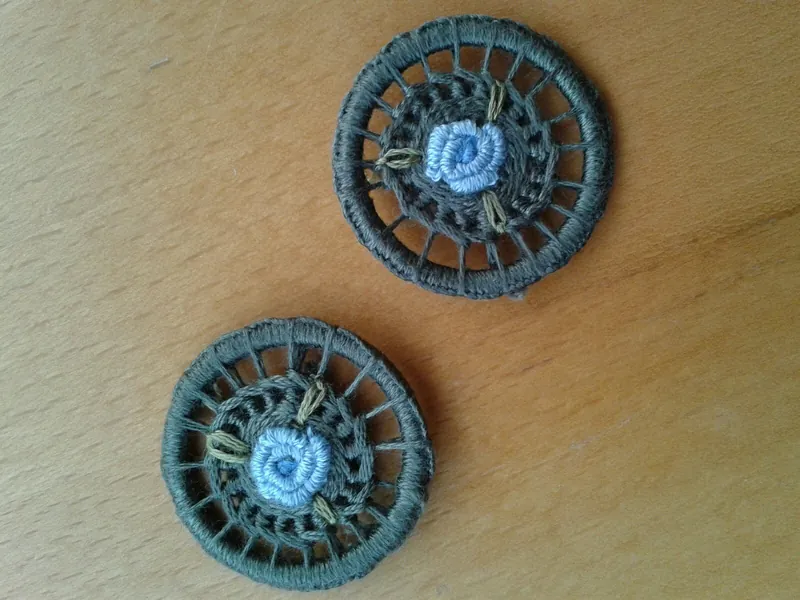
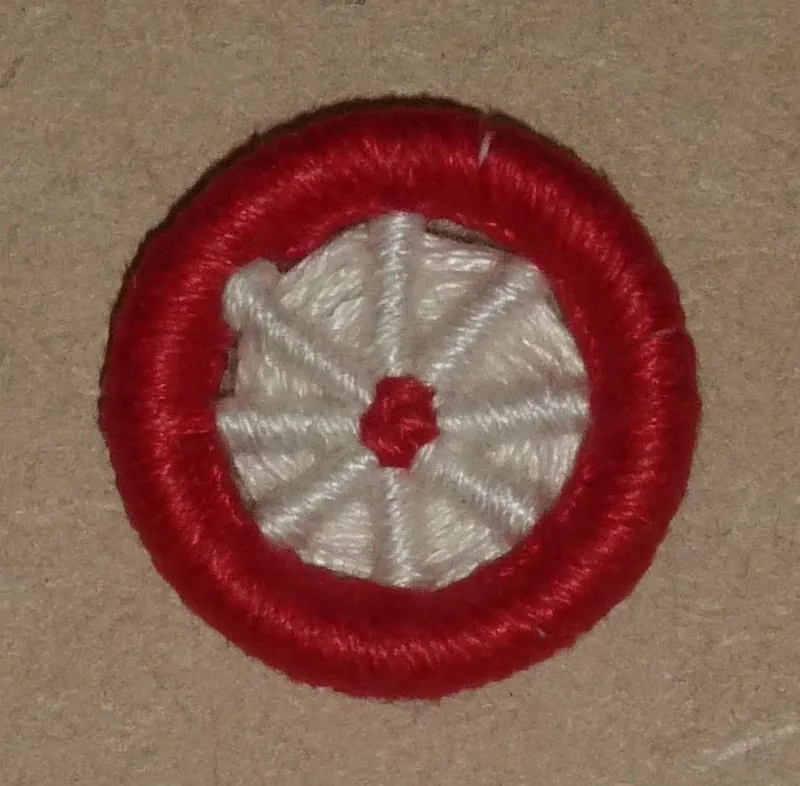
The craft never quite died. People still make Dorset buttons by hand today, like the ones pictured here. In 2022 the sculptor Bruce Williams made life-size steel cattle for a new supermarket on the site of Shaftesbury’s old cattle market, cut with patterns of lace and Dorset buttons. And Gold Hill Museum has hidden six Dorset Button Mice in its display cases for visitors to find. Gold Hill Museum
Want to try something with your own hands? Our make and mend page starts with the basics.