Shell, bone, horn, glass, wood and metal all made good buttons. But some of the most popular were made from things you’d never guess.
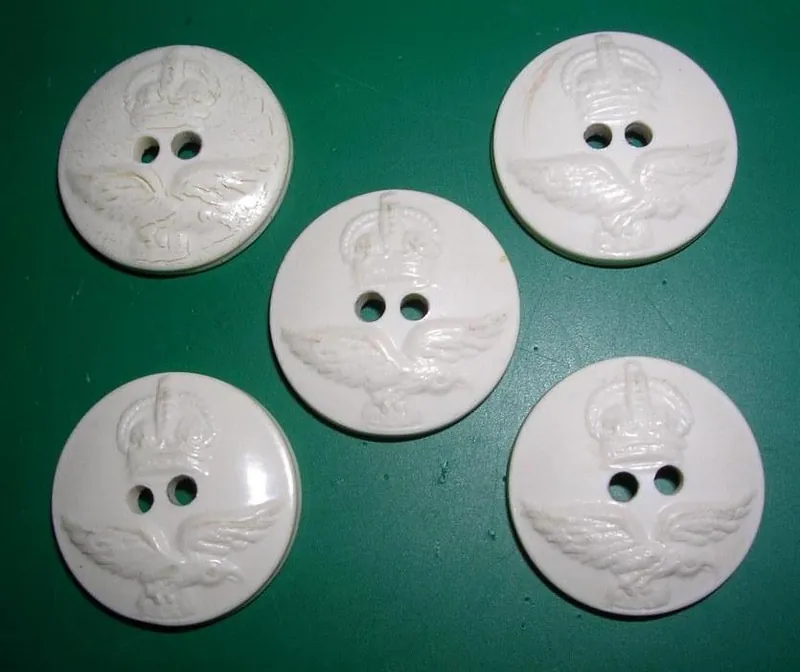
Buttons from milk
Casein plastic is made from milk. In a kitchen, you can make a crude version with warm skimmed milk and a little vinegar. Commercial casein is hardened and preserved with formaldehyde, and it was first patented in 1899. It was often made to imitate horn, and was used for buttons, cutlery handles and knitting needles. Museum of Design in Plastics
It was sold under names like Galalith, Erinoid and Lactoid. Museum of Design in Plastics Casein buttons looked good, but did not wear well after repeated washing. Britannica
Ivory that grows on trees
“Vegetable ivory” comes from the hard, cream-coloured seed of certain palm trees. It looks and feels like real ivory, takes dye easily and polishes to a gloss, and it was used for buttons, dice, knife handles and Japanese netsuke. Museum of Fine Arts, Boston
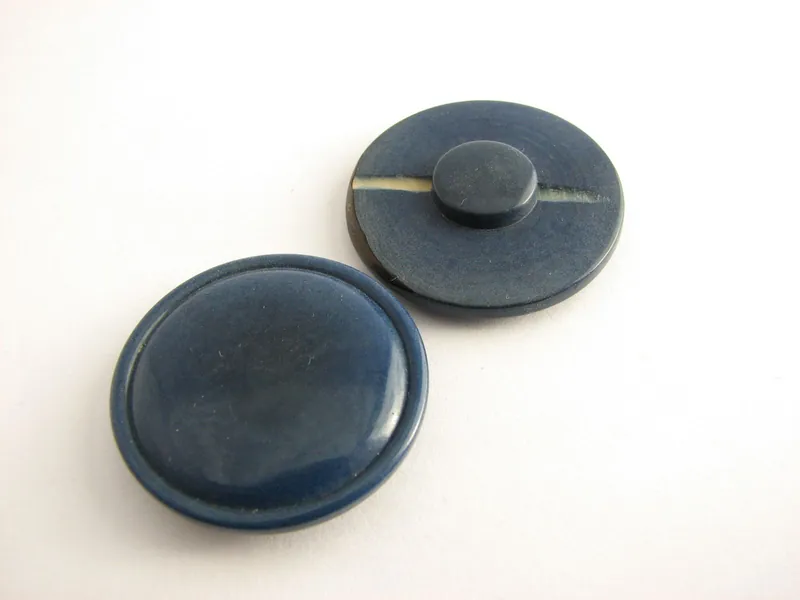
Britannica describes the button trade’s ivory nut as the nut of the ivory, tagua or corozo palm, which grows in Ecuador, Colombia and Panama. The nuts grow in clusters of 15 to 100, in woody burrs that can be as big as a man’s head, and each nut is about the size of a hen’s egg. Most vegetable-ivory buttons went on suits and overcoats. Britannica
Rubber and Bakelite
Charles Goodyear’s hard rubber was turned into buttons from about 1853 to 1872. In 1909 Leo Baekeland created what the National Button Society calls the first true plastic, and Bakelite buttons are, in the National Button Society’s words, “a collector’s delight” today. National Button Society
And then everything changed
In the 20th century buttons became mainly practical, and many were replaced by the zip. Plastics such as polystyrene took over. Britannica Melamine buttons became cheap imitations of pearl ones. Britannica Today one town in eastern China, Qiaotou, is described by Britannica as the world’s leading maker of plastic buttons, producing more than 12 billion a year. Britannica
For the shell buttons that came before plastic, read the town that made buttons from the Mississippi.