At its peak, one small river town in Iowa made about 1.5 billion buttons a year, nearly 37 per cent of all the buttons in the world. They were cut from the shells of mussels pulled out of the Mississippi. Biographical Dictionary of Iowa
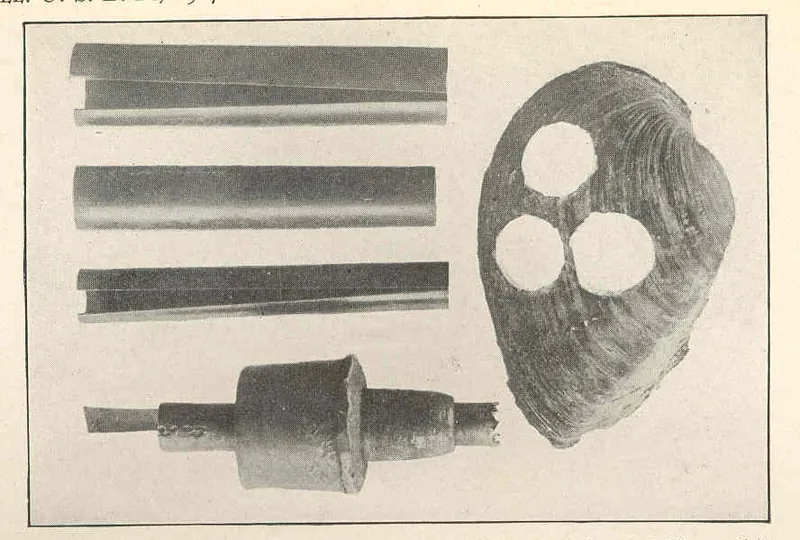
A box of shells from America
John Frederick Boepple was born in Ottensen, near Hamburg, in 1854 and learned the family trade of making buttons from horn, sea shell and other materials. When a change in tariffs put him out of business in Germany, he remembered a box of mussel shells his father had once been sent from America. His only clue was that they came from a river about 200 miles west of Chicago. Biographical Dictionary of Iowa
Nobody would lend him money, so he worked as a farm hand in Iowa. In his spare time he built a foot-powered machine like the ones he had used in Germany, gathered shells from the river, and cut, polished and sold buttons. Iowa PBS
The Pearl City
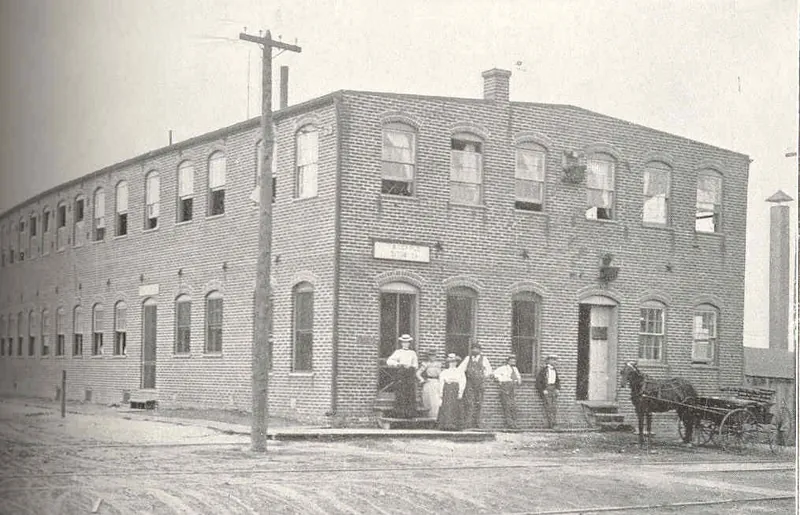
In 1891 he opened a button shop near Muscatine’s rich mussel beds with a financial partner, William Molis. The timing was lucky: the McKinley tariff of 1890 had made imported sea shell expensive. Many people in Muscatine had thought it the foolish dream of a strange man who spoke poor English. Biographical Dictionary of Iowa
It took off fast. By 1897 more than 300 “clammers” were reportedly working the river between Burlington and Clinton, and 53 button-cutting shops in Muscatine were using more than 3,500 tons of shell. Biographical Dictionary of Iowa In 1898 Iowa turned out 138,615,696 buttons. Iowa PBS At the industry’s peak it employed half the workforce in the Muscatine area. Biographical Dictionary of Iowa
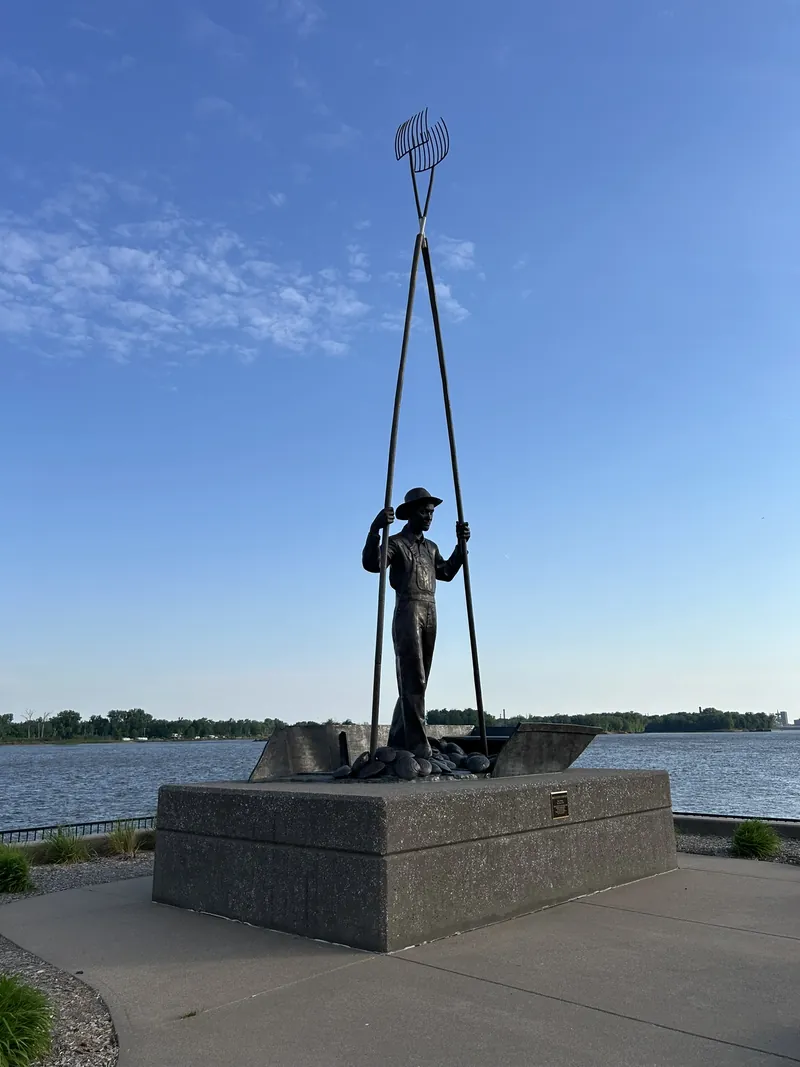
The clammers dragged lines of hooks along the riverbed. A local history of 1912, quoted by Iowa PBS, explains why it worked: a mussel lies with its mouth open upstream to catch food, and when a hook touches it, “the wretched fool grabs it” and holds on. Iowa PBS
Inside the factories
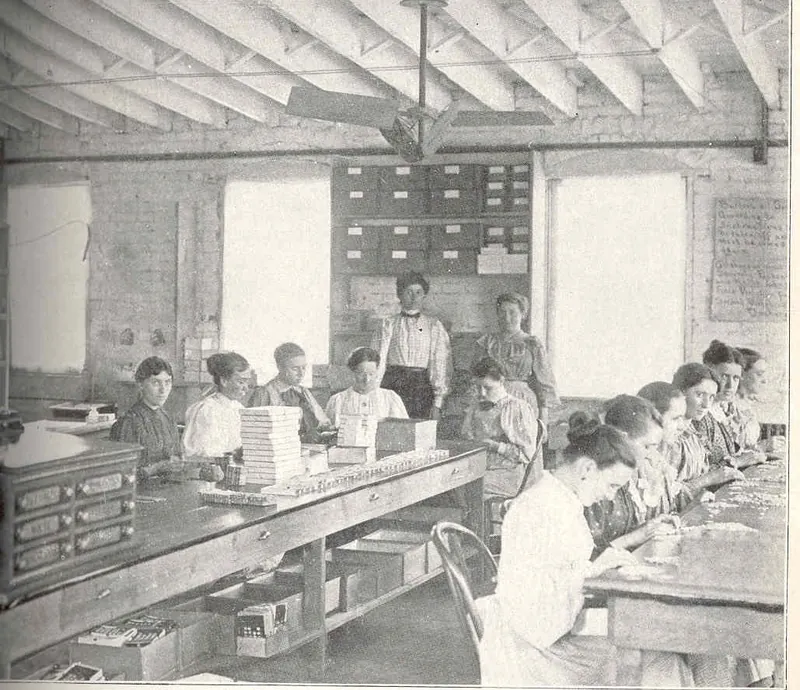
The shells were boiled to open them, then soaked for about a week so they would not break when sawn. Cutters, always men and the best-paid workers, used a revolving tubular saw to cut round blanks from each shell, and a good cutter got as many blanks as possible from every one. Boys ground the blanks smooth, other workers carved and drilled them, and the buttons were tumbled with powdered pumice for half a day to make them shine. Iowa PBS
Cutters earned around $8 to $10 a week. Women, who did the facing, drilling, sorting and packing, earned $4 to $6 and could not hope to become cutters. Iowa PBS
A secretive genius, and a sad ending
Boepple was a fine craftsman but a poor businessman. He suspected others wanted to steal his knowledge, and ordered unnecessary equipment and chemicals just to confuse his competitors. His partners eventually eased him out of the Muscatine factory, and he became a shell buyer for other companies. Biographical Dictionary of Iowa
In 1910 he joined the new Fairport Biological Station, set up to study how to breed mussels, and worked on a hook that left smaller mussels in the river to grow. While working a river in Indiana in the autumn of 1911 he reportedly stepped on a shell and cut his foot. The cut caused a blood infection, and he died on 30 January 1912. Muscatine’s mayor asked every business to close for an hour during his funeral. Biographical Dictionary of Iowa
When the shells ran out
By 1900 few mussels were left in the local beds. Clammers moved on to the Arkansas, Ohio and Tennessee rivers and shipped the shells to Muscatine, but pollution killed many mussel beds, and in the end cheaper plastic buttons replaced pearl ones. Iowa PBS
That shimmer never quite went away. The pearly look is still one of the most common button colours, only now it is usually made of plastic. AramcoWorld