Look at your shirt. If it’s a man’s shirt, the buttons are on the right. If it’s a woman’s, they’re on the left. It isn’t about being left- or right-handed: about 90 per cent of people are right-handed, so that can’t explain it. Smithsonian
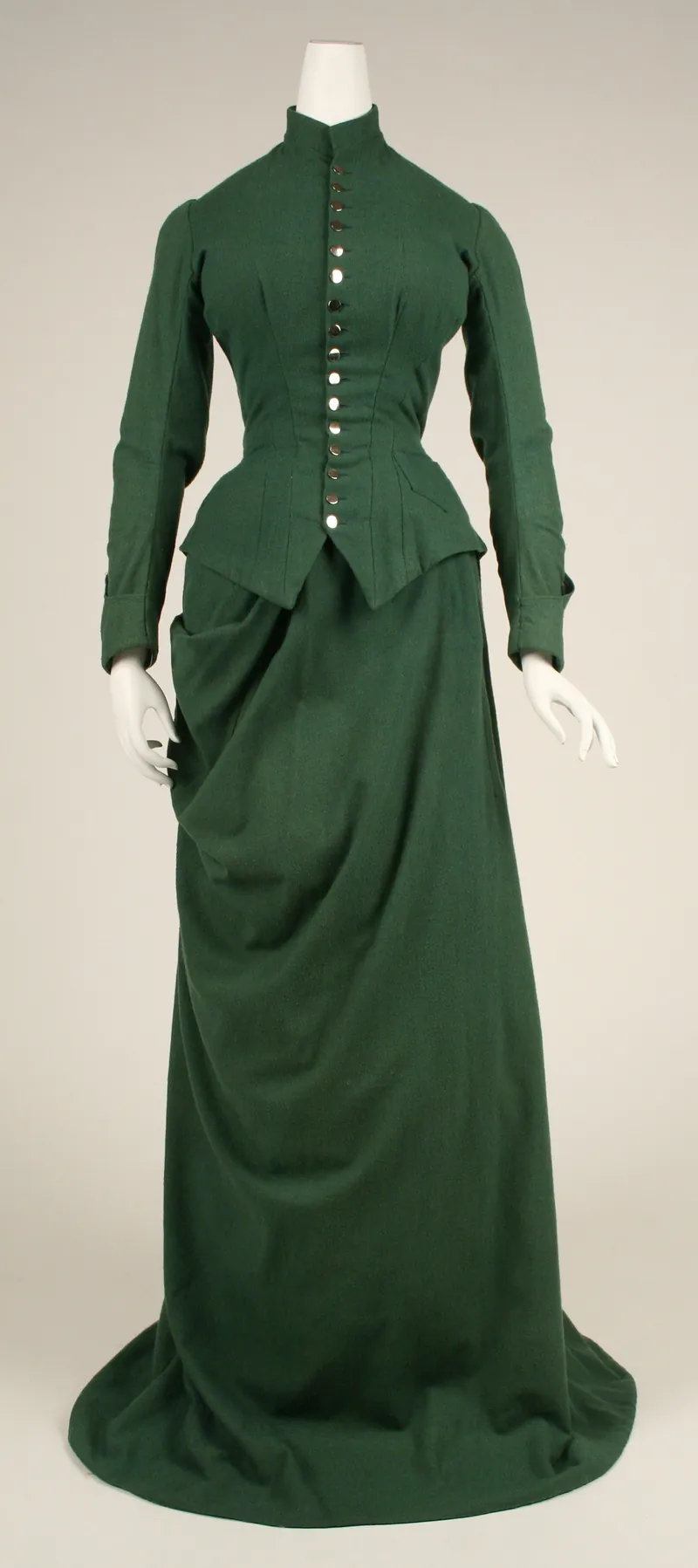
Theory 1: the maid did it
The most popular explanation is that wealthy women, in layers of petticoats, corsets and bustles, were often dressed by servants. Putting the buttons on the opposite side would have made things easier for a right-handed maid facing her. Men dressed themselves, so their buttons stayed put. Smithsonian
Theory 2: swords and armour
For men’s clothes, one idea goes back to armour. A book from the Metropolitan Museum of Art explains that plates overlapped from left to right so that an enemy’s lance would not slip between them, since the left side, protected by the shield, faced the enemy. Smithsonian Another says a gentleman wore his sword on the left and drew it with his right hand, so a jacket that buttoned the other way would snag the handle. Smithsonian
Theories 3 to 5: saddles, babies and a statement
Women rode side-saddle with their right side facing forward, so buttons on the left might have kept out the breeze. Mothers were more likely to hold a baby with their left arm, leaving the right hand free to open a shirt for feeding. And some have suggested the difference was deliberate, a way of marking men and women as different. Smithsonian
What old pictures say
A costume historian who looked through centuries of pictures found that buttons were rare on women’s clothes before the late 18th century. When they did appear in the late 1700s, they were on the right, the same side as men’s. In the 1830s right and left were about even, in the 1850s left was slightly ahead, and from the late 1860s, when buttons became common on women’s dresses, they were all on the left. Marquise.de
That suggests the women’s side settled down in the middle of the 19th century, not in the age of knights. The site’s own theory is that as women’s clothes borrowed more from menswear, the button side became a quiet way to show that a garment was made for a woman. Marquise.de
The honest answer is that nobody knows. As Smithsonian Magazine puts it, historians may never know exactly how women’s buttons ended up on the left. Smithsonian