Not every button is sewn on. Some of the strangest buttons in the world are the ones we press every day, and some of them aren’t connected to anything.
Push to cross (or don’t)
In 2004 The New York Times reported that New York had switched off most of its pedestrian crossing buttons long before, when computer-controlled traffic signals arrived, even though people kept pressing them. City figures showed that more than 2,500 of the 3,250 walk buttons still on the streets worked essentially as “mechanical placebos”. New York Times, 2004
Britain has them too. In 2013 it emerged that many British crossing buttons are fakes, with the lights run by an automated system that responds to traffic. The Telegraph
The great lift debate
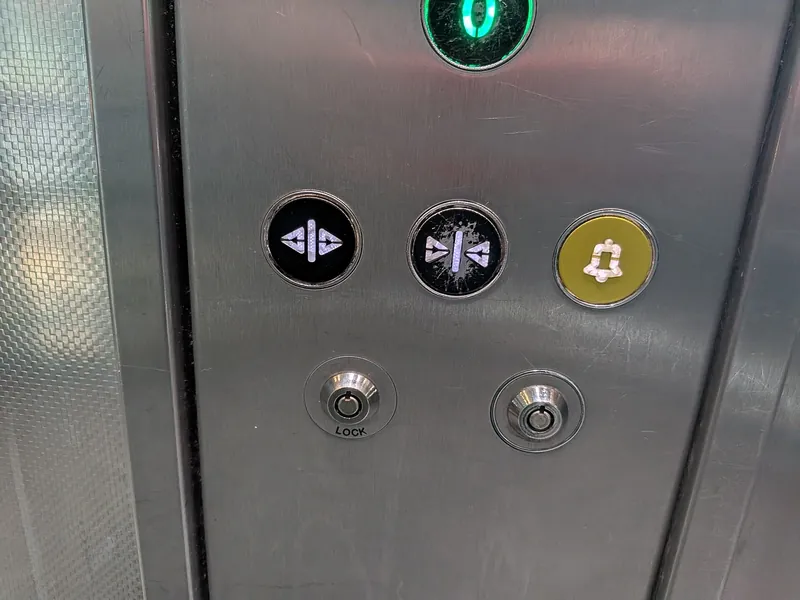
In 2016 the head of the US National Elevator Industry trade group, Karen Penafiel, told The New York Times that American lift door-close buttons had not worked for decades. The change came after the Americans with Disabilities Act of 1990, which meant doors had to stay open long enough for a disabled person to get in. The Telegraph
A veteran New York lift technician put it bluntly on PBS NOVA: the door-close button “will not close the doors no matter how many times you push it”, and it is there to let people think they have some control. Not everyone agreed, and NOVA ended up asking viewers to time their own lifts with a stopwatch. PBS NOVA
But in Britain…
Here is the twist. The technical director of Britain’s Lift and Escalator Industry Association told The Telegraph that close-door buttons, where a lift has them, do tend to work. A London lift company said British firms normally wire them up so they actually work, and that they are most common in places like multi-storey car parks. The Telegraph
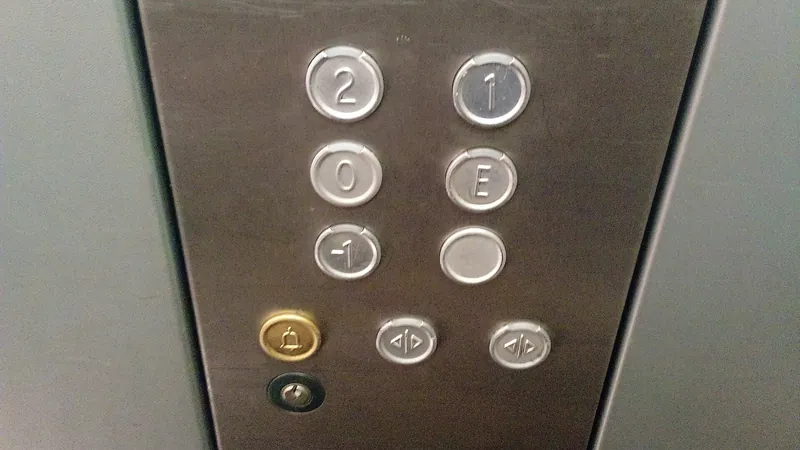
And some lifts don’t offer the choice at all. The one pictured here, in the Netherlands, has two buttons for opening the door and none for closing it.
So the next time you jab the close-door button in a British lift, it might be listening. In an American one, probably not.